-
-
-
-
Contact Us
Various types of IMD in-mold decoration process introduction
Release time:
2023-08-21
Plastic material is a widely used material in automobile, home appliance, notebook, consumer electronics, medical and other aspects of our life. Plastic materials as product appearance parts, we generally do a variety of surface treatment for decoration, but for environmental protection and other factors, the traditional spraying, water transfer printing and other processes have not met today's needs. Therefore, the environmentally friendly and richer in-mold decoration process (IMD: In-Mold Decoration) has become more and more popular.
IMD process is developed by foreign big factories, according to the characteristics of their respective products, the process name appeared a lot; on the other hand, this process first entered the Taiwan region, and then introduced into the mainland, the process name is abbreviated from the English translation, so there is a variety of names. For example, in-mold injection molding, in-mold transfer printing, in-mold labeling, insert molding... IMD, IMR, IML, FIM, INS... Various names and definitions. I believe that many people will be somewhat confused about this, today, I will take you to sort out these designations.
In-mold decoration (IMD) also has a history of many years, in the automobile, home appliances and other applications, I believe that we most often heard of the term is probably the three: IMR, IML, INS. the following we look at the three processes in the end is what.
1. IMR
According to Wikipedia, the Chinese name of IMR is in-mold transfer, which is the abbreviation of In-Mold Decoration by Roller (partly interpreted as In molding release), and of course partly abbreviated as In-Mold Roller, belonging to IMD (In-Mold Decoration), a kind of In-Mold Decoration (IMD) technology. It is a roll-to-roll process. It is a roll-to-roll process that can be fully automated. It is especially suitable for the outer surface of products with decorative panels and functional panels, and is now widely used in notebooks, early cell phones, home appliances, and automobiles.

The IMR process is characterized by the outermost layer of the film being a release film, generally made of PET. After production is completed, the product is separated from the base film and can be formed into roll-to-roll continuous production.

The process flow of IMR is as follows:

2. IML
IML English is In-Mold Label (part of the In molding Lamination), generally called in-mold insert injection molding, in-mold labeling, etc. (lower degree of stretching), used in mobile phones, this technology has been widely used in home appliances, automotive, medical electronics and other industries. (lower degree of stretching), useful in the cell phone, this technology has been widely used in home appliances, automotive, medical electronics and other industries. For example, common air conditioning, washing machine IMD control panel, sweeping robot cover, automotive integrated display cover, center control panel.

In-mold insert injection molding process is a very significant feature: the surface is a layer of hardened transparent film, the middle is a printed pattern layer, the back is a plastic layer, due to the ink sandwiched in the middle of the product to prevent the surface from being scratched and abrasion-resistant rubbing, and can be maintained for a long time to maintain the color of the distinctive color is not easy to fade. The difference with IMR is that the whole of the IML film stays on the surface of the product.

The film substrate of IML can be PET, PMMA, ABS, PC, PMMA or PC+PMMA, ABS+PMMA according to the application scenarios and needs, but in the automotive industry, it is generally PC, PC+PMMA.
An important step in IML processing that distinguishes it from IMR is diaphragm molding. Generally speaking, there are two kinds of molding methods: hot pressing and air high-pressure: relatively speaking, air high-pressure effect is better, the appearance of the diaphragm is less damage.


3. INS
INS should be the proper term for high tensile in-mold injection molding in the automotive industry. What is the specific English of this designation, I am not very clear, but according to the collation, generally refers to the inlay injection molding process. This process is the use of thermosuction molding or high-pressure molding methods, the transfer of good ABS film or ABS + PMMA for three degrees of stretching, and then according to the product shape cut out inserts, and then accurately placed in the insert mold cavity, injection molding. Some manufacturers also call it IMF: In-Mold Forming, which refers to high tensile IML.
INS main products: automotive interior trim products, instrument panel trim, sub-instrument panels, door trim, rear armrests, signage and so on;


INS film is ABS film or ABS+PMMA, generally 0.5mm thick, PMMA accounts for about 25% or 0.125mm, because PMMA has better scratch resistance compared to ABS, there are more ABS+PMMA composite films in automobile interiors.

The membrane of INS is similar to IML, which also needs to be molded first. As the material is ABS/ABS+PMMA, its molding generally adopts air pressure molding.

IMR/IML/INS Process Comparison
IMR/IML/INS are actually IMD processing, but the process, film material, and effect will be somewhat different. And INS and IML process is basically the same, but the degree of stretching is different.

Process comparison, source Junhong Precision Industry
Below, I do a more detailed comparison for these three processes:

Introduction to the emerging process of IMD
IMT
IMT: Inner Molding Translate label, cell phone industry research and development, mainly refers to 3D texture in-mold transfer printing, processing process is similar to IML, but there is a release layer on the film. It is mostly used for imitation glass and ceramic texture.

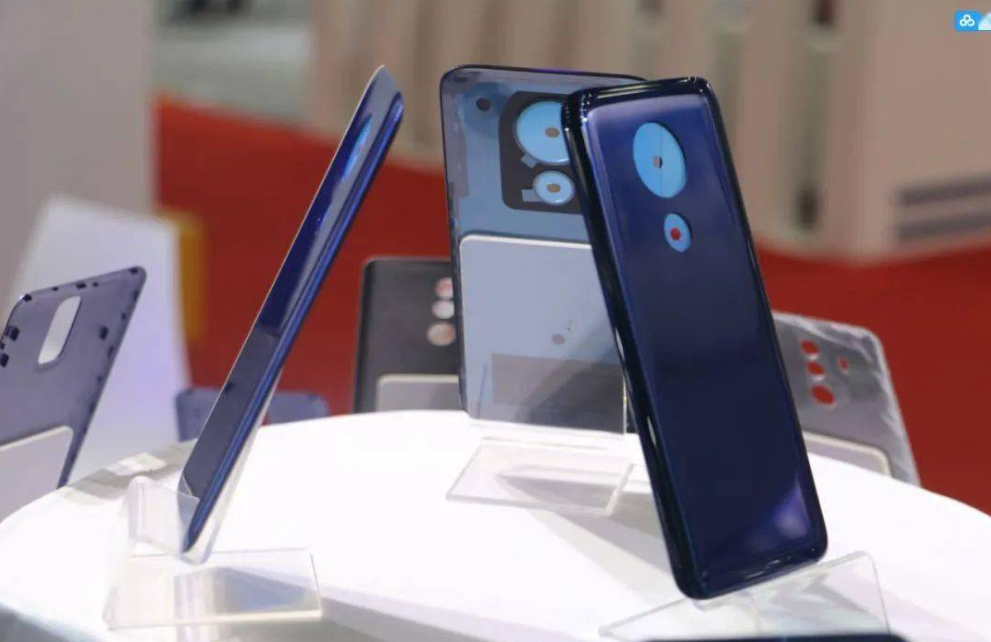
The core of IMT lies in the cool double-layer 3D optical texture, and its film is similar to IMR, with a releasable base film, but the existing is still processed by cutting into sheets. It can also be 3D molded with wrapped edges.

IMT process flow

IME
IME: In Mold Electronics, refers to the combination of traditional In Mold Decoration (IMD) technology and flexible printed circuits, which can realize the integration of touch, decoration, lighting and other functions. A new concept popularized in recent years, this technology can be widely used in automotive, home appliances, consumer electronics, medical devices and other fields.
IME's membrane is similar to IML in the decorative part, but it is important to have printed circuits and there will be part of the component welding.

IME process flow

IMD-PUR
IMD-PUR: The decoration of plastic parts is completed during the injection molding process by means of in-mold transfers, and then PU (polyurethane) is infused in the same mold cavity, so that sophisticated designs with crystal-clear, high-gloss surfaces can be achieved. KURZ developed this technology for the K Fair 2019 in Germany and produced it with an ENGEL injection molding machine.

Previous:

Social Media
TikTok
Channels
Contact Information
Address: Unit 502, 5th Floor, West Side, No.12 Haijing East Road, Xiamen Area, China (Fujian) Pilot Free Trade Zone
Technical Services: 18030106835
E-mail: Support@winlight.tech
Company Phone: 0592-5201826
All Rights Reserved © 2024 Xiamen Winlight Technology Innovation Group Co., Ltd.